
CurrenT EXHIBITION
PATCH
패치
EXHIBITION DATE
2026. 10. 17 - 2026. 11. 14
statement
ARTISTS
Am I looking at the line, or flowing as one?
There are mornings when the light enters the studio at a long, low angle, and only then do certain things become visible. The smallest particles of dust, rising slowly along the beam. They seem to carry no weight. They make no claim to being here. They do not appear to be going anywhere in particular. They yield to whatever movement passes through the air, resume their quiet dance, and eventually settle somewhere — or lift again.
And yet these small, seemingly negligible things fill every corner of our world, densely and without a gap.
Young La’s canvases work much the same way. There is an empty surface. Onto that wide emptiness she sets down one small line at a time, waiting — and waiting again — until a stroke finds the place that belongs to it. Some lines push forward with force. Some hesitate, then stop. Some thin out and quietly disappear. She does not say that she draws them. She says she waits, patiently, until a line speaks to her, and then she simply writes it down.
The butterfly’s dream
Some twenty-three centuries ago, Zhuangzi left us this story.
Once he dreamed he was a butterfly, drifting on the air, so delighted with itself and going wherever it wished that he forgot entirely that he was a man named Zhuang Zhou. Then he woke, and there he was, plain and undeniable. But now he could not tell: had the man dreamed the butterfly, or was the butterfly dreaming the man?
This exhibition borrows the structure of that dream. The first floor is the dream. The second floor is the waking.
We suggest beginning downstairs — though you are not required to. Zhuangzi never told us which came first, either. If you have come down from the second floor instead, then what you were regarding from a distance a moment ago is now all around you. That is another of the paths this exhibition has prepared for you.
First floor — Walking inside the dream
The moment you step onto the first floor, you do not stand in front of the paintings. You walk into them.
Small canvases, the artist’s old sketches, well-handled drawings, and three-dimensional objects are stretched across the walls and through the room. Some works sit below eye level; others ask you to look up. Here, the path you walk, the spot where you happen to stop, the angle at which you lean in — all of it becomes another line in this room.
You are not a visitor. You are a stroke passing across the surface. A butterfly, wandering through a dream.
The stairs — Time to wake
Then you climb the stairs. Waking takes time as well. There is no need to hurry.
Second floor — Looking from a distance
Upstairs, large canvases hang with generous space between them. Now you step back and look. What seemed, up close, to be scattered marks turns out — only from a distance — to have been forming a shape, a breath.
And here is the strange part. Those countless lines you are now regarding from across the room are the very lines you were one of, only a few minutes ago.
Waking, it seems, may not be a matter of returning to who you were. It may be closer to realizing, a little late, that you were one among them all along.
And your own life
Our lives are not so different. While you are passing through the middle of something, everything looks like fragments. Today’s mistake, yesterday’s hesitation, the things you never managed to finish. From the inside, there is no telling what shape they make.
Then time passes, you step back a little, and those unruly lines have somehow drawn a single trajectory. The line that pushed forward, the line that faltered and stopped, the line that thinned out and vanished — each was in its place after all.
As with a single speck of dust in the light: even the smallest thing has a place of its own.
Once more, downstairs
If you have a little time left, go back down to the first floor after you have seen the second. The small paintings and old sketches that read as scattered fragments before will begin to read as parts of the large canvas you have just seen upstairs. The same room — and not the same place at all.
Walk slowly as you like. Settle in front of a single work if you like. There is no correct answer here, and no required order. May the experience of becoming a line, and of looking at lines, become one more small line in your own life.
Young La Park
CURATED BY
Cecilia Lee
VENUE
The Green Gallery
6762 Beach Blvd,
Buena Park, CA
In East Asian philosophy, the Five Elements are more than merely the foundational components (Water, Fire, Metal, Earth, and Wood) that construct our universe. They represent the dynamic principle of movement threading through infinite time and space, as well as the human organism. At their intersections, they dictate the cyclical laws where creation, extinction, mutual generation, and mutual constraint endlessly interplay. These five energies encourage one another, at times restraining and at others permeating, ultimately forming a singular, harmonious source. In today’s fast-paced contemporary world, we live in an era marked by uncertainty and division. Amidst noisy disputes devoid of philosophy, the cyclical thinking of the Five Elements emerges anew as a language of harmony and a philosophy of regeneration, bridging human to human, humanity to nature, and past to future. It reminds us that despite our differences, we can coexist, and that every existing entity possesses its own innate worth. For this exhibition, five artists, each embodying one of the Five Elements, transcend the boundaries between emerging and established, visual and interdisciplinary arts, time and space, and creator and audience. Together, they resonate and reflect in unison. We invite you to stroll through this flow of time where the works of these five artists harmoniously intertwine along the path of the Five Elements, here at H.art1, a sanctuary where art gazes toward the future upon the historic grounds of Euljiro. 동아시아 사상에서 오행(五行)은 우주를 구성하는 핵심인 다섯 원소(水·火·金·土·木)일 뿐만 아니라, 무한한 시공간(宇宙)과 인간이라는 유기체를 관통하는 운동의 원리이자 그 경계에서 발생하는 생성과 소멸, 상생과 상극이 끊임없이 교차하는 순환의 법칙을 뜻합니다. 이 다섯 기운은 서로를 북돋우며(동同), 때로는 억제하기도 스며들기도 하며(심沁), 그 안에서 하나의 규칙(원源)을 형성합니다. 가파른 현대 사회에서 우리는 불확실성과 분열의 시대를 살고 있습니다. 철학 없는 논쟁이 난무하는 이 시대, 오행의 순환적 사유는 인간과 인간, 인간과 자연, 과거와 미래를 이어주는 ‘조화의 언어’, ‘재생의 철학’으로 새롭게 재조명되고 있습니다. 우리가 서로 달라도 여전히 함께 할 수 있음을, 존재하는 모든 것에는 그에 걸맞는 가치가 있음을 되새기게 합니다. 이번 전시에서 오행의 각 원소를 품은 다섯 작가들은 신진과 중견, 시각 예술과 복합 예술, 시간과 공간, 나아가 작가와 관객의 경계를 뛰어 넘어 서로 공명하며 함께 사유합니다. 역사가 흐르는 땅 을지로, 그 위 예술의 미래를 향하는 하트원에서 다섯 작가들의 작품이 오행을 따라 조화롭게 얽히고 흐르는 시간을 함께 거닐어 보세요.


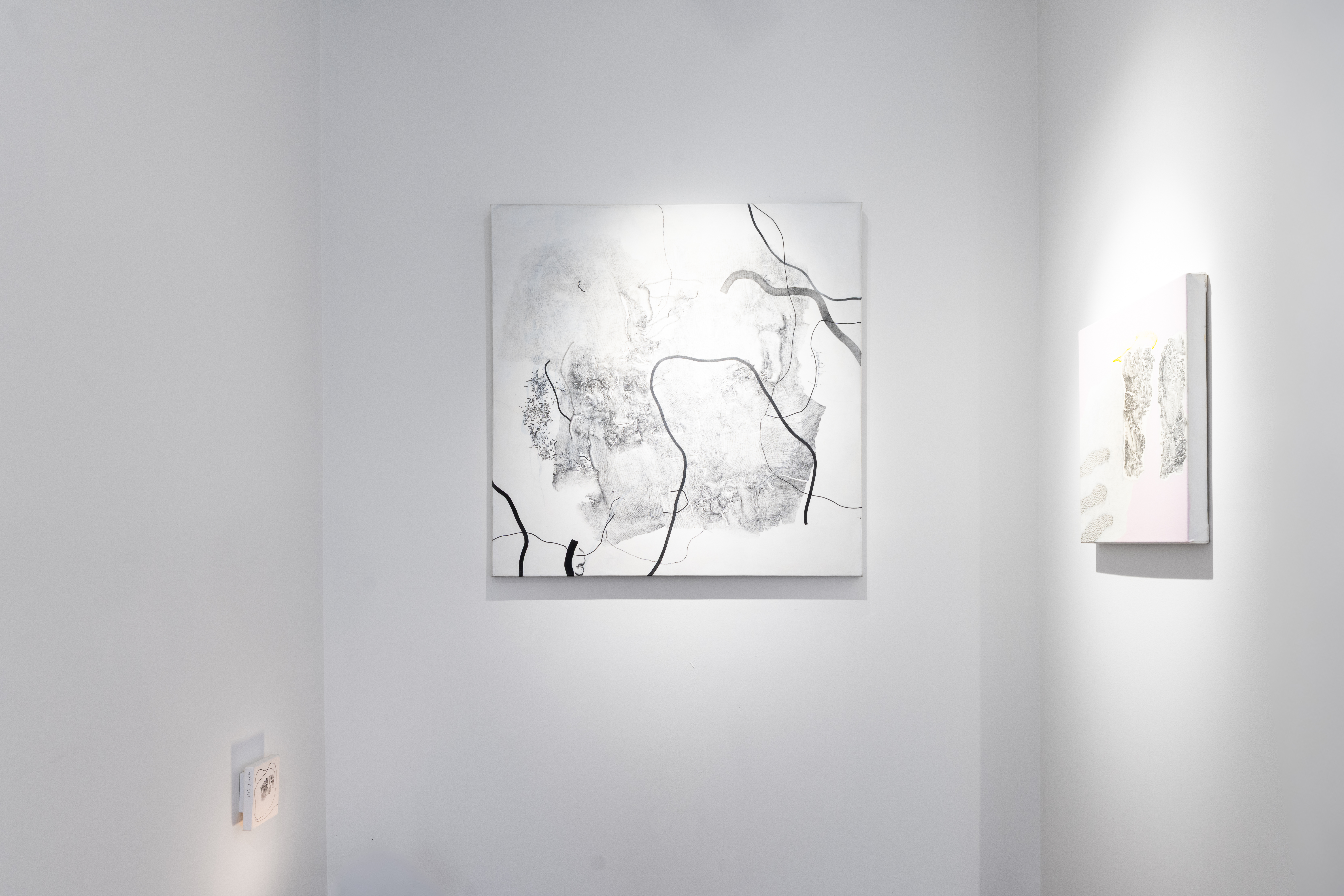
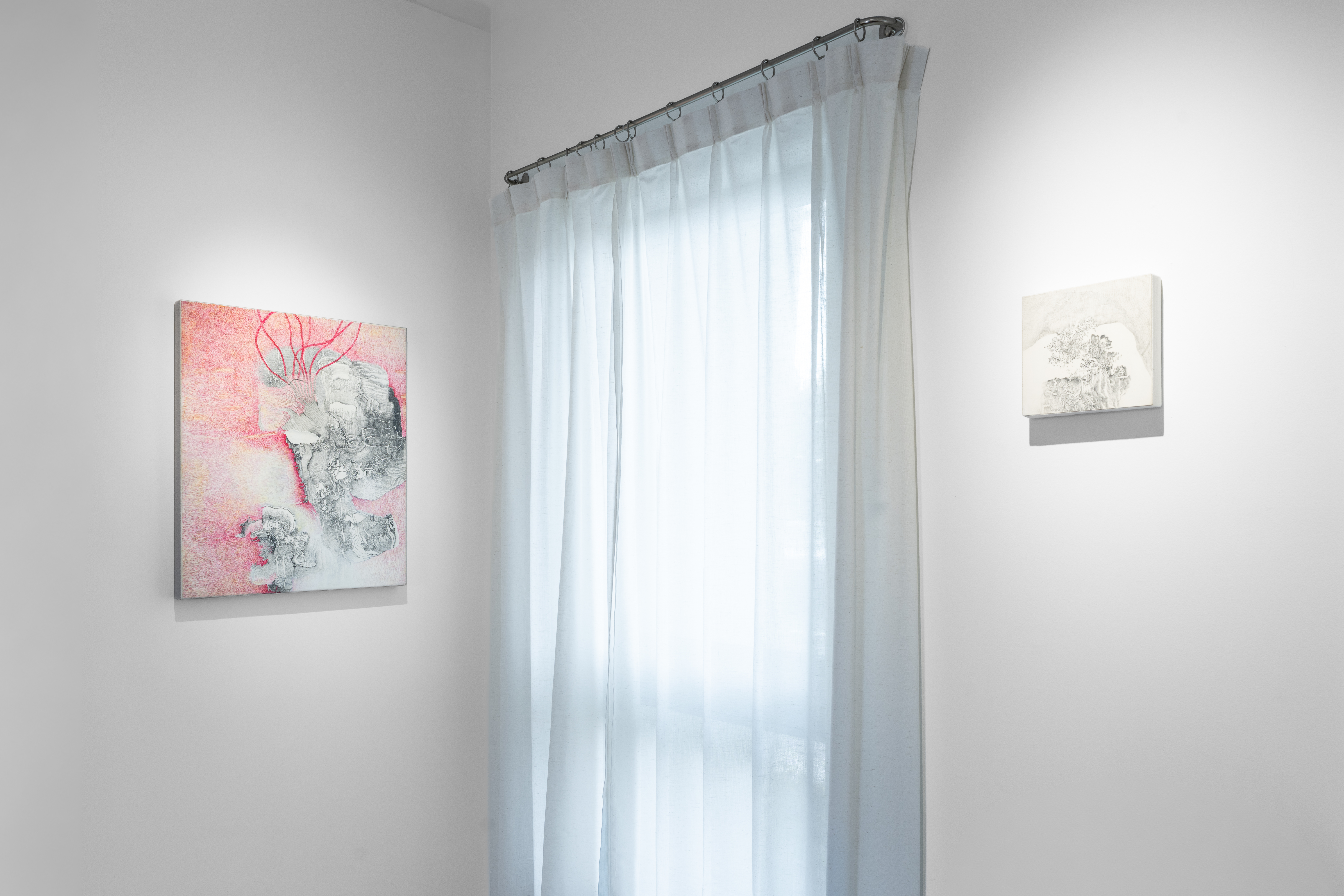
Selected works


Young La Park
The Odyssey, 2017
Young La Park
Acrylic and Graphite on Canvas, 24 x 28 inches
Mother, 2025
Acrylics and Color Pencils on Linen, 40 x 30 inches

Young La Park
Untitled, 2013
Young La Park
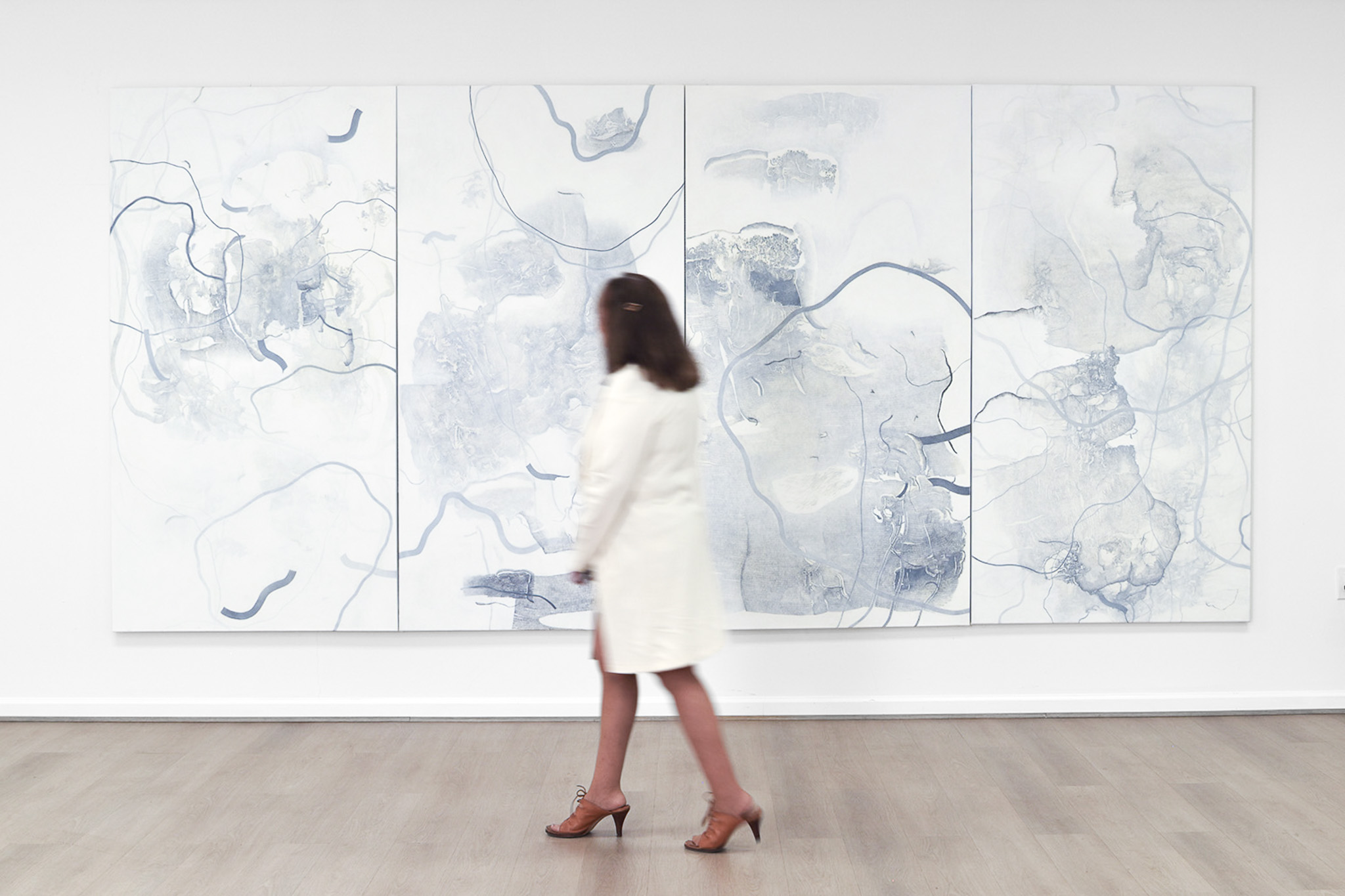
Acrylic and graphite on canvas, 48 x 11 inches *4
Last Days, 2026
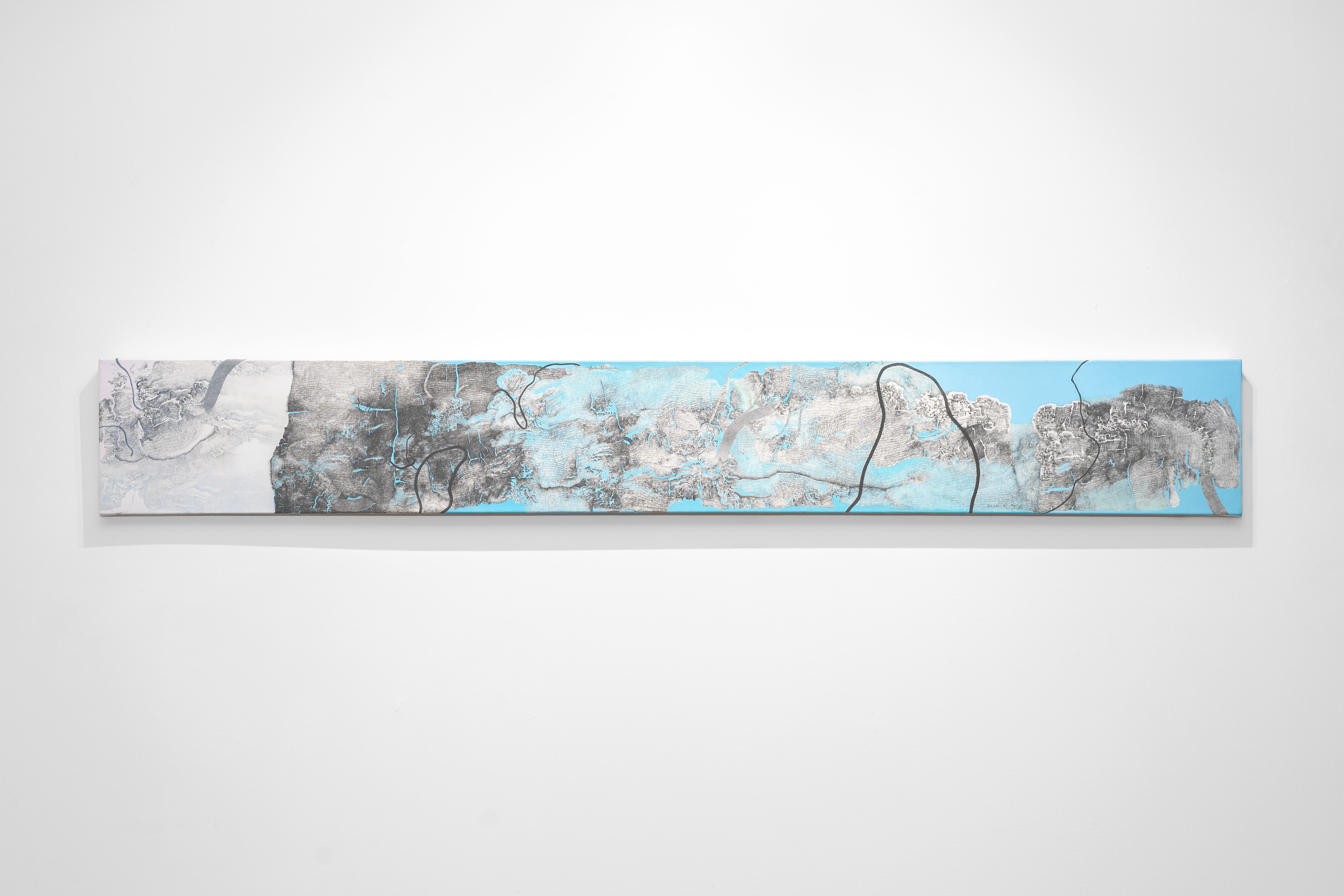
Acrylic and graphite on canvas, 10.75 x 80 inches


Young La Park
Unter den grossen Himmel zu treten, 2026
Young La Park
Acrylic, indian ink and graphite on canvas, 66 x 60 inches
Acrylic and graphite on canvas, 40 x 40 inches
The Others VI, 2017